

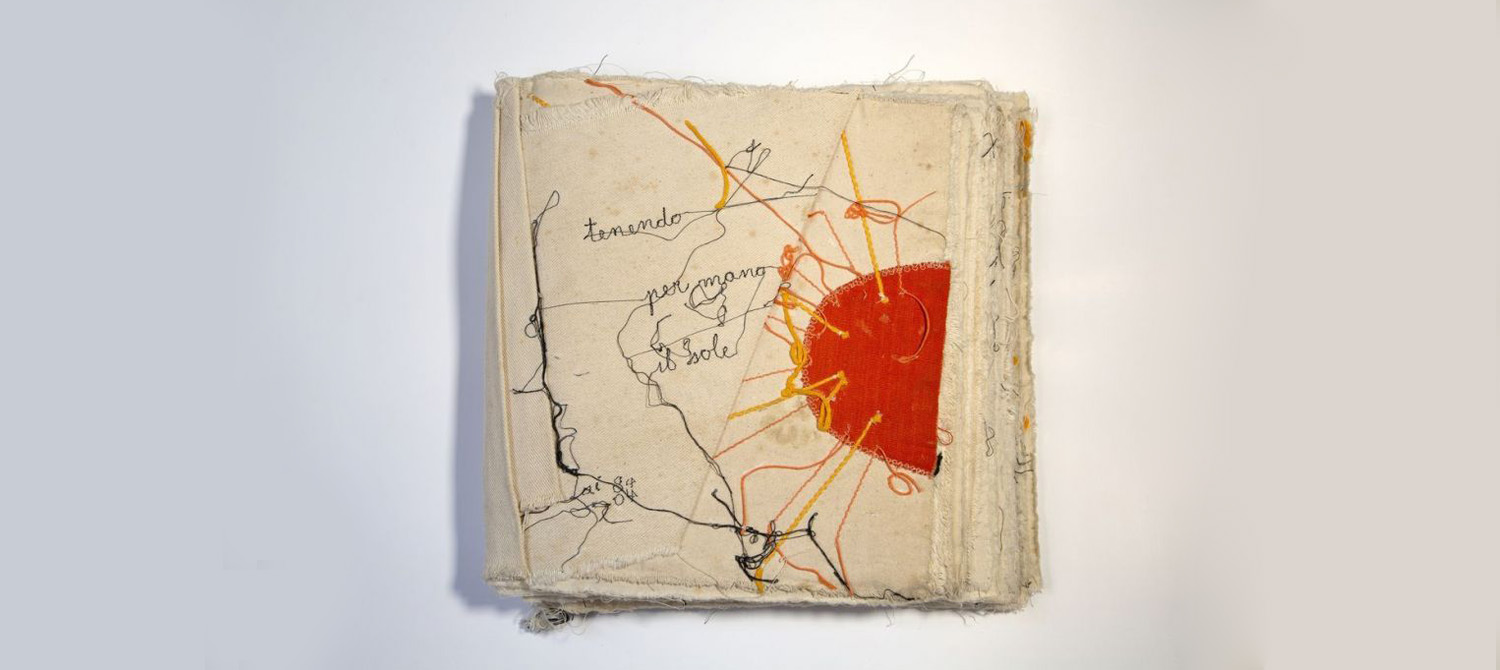
Last week, I decided to take part in a conference hosted by the Museo del Tessuto in Prato on Maria Lai. It was definitely the right choice because it was so fascinating that I was inspired to write about it on the blog.
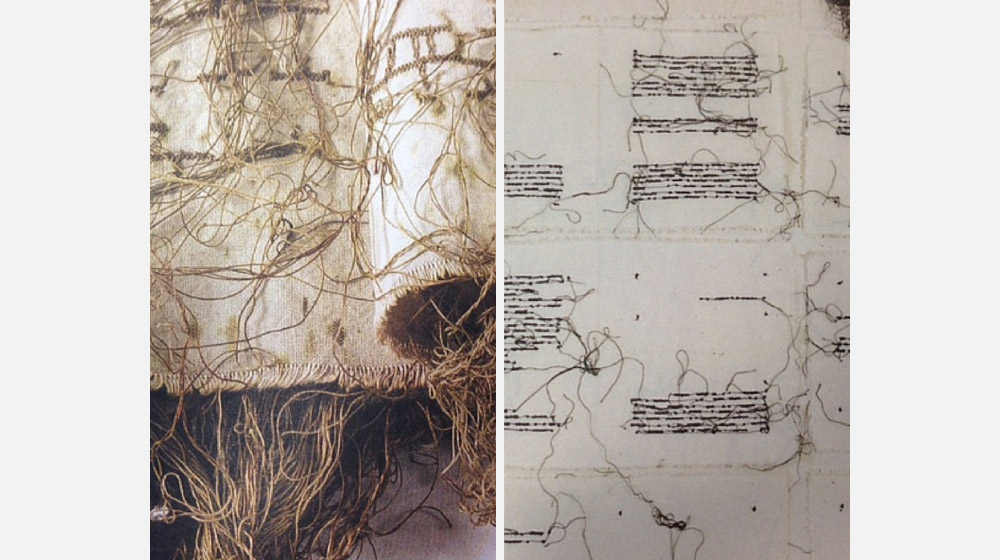
To celebrate the release of the catalog for the exhibition ‘Maria Lai. Sewing the world back together’, the Prato Architects Guild felt the need to delve into the creative process and the life of this versatile artist through the words of Antonio Marras, the sublime stylist who was a friend and a collaborator of Maria's, and through those of Lorenzo Giusti, the Director of MAN and curator of the retrospective. They fully achieved their goal: during the conversation between the two, many memories and feelings about Maria emerged which connected to describe her work.
Maria Lai left us a great number of works, such as drawings of landscapes and of working women, portraits, small sculptures, books, sewn canvases, looms, environmental activities and projects. She also dabbled in poetry, cinema, and theater, as she was an extremely curious and capable woman. She had a strong connection with her birthplace, Sardinia, and with the double-sided nature of the islanders, who are at the same time very welcoming but also shy. Many facts and anectodes from the story told by these two voices struck me, and I wish I could tell them all to you. But since I can't go on forever, I chose two stories to tell.
The first anecdote directly concerns her signature style. In 1981 the mayor of Ulassai, the birthplace of Maria Lai, asked her to create a war memorial to commemorate the fallen soldiers. She refused, saying she would rather make a monument to the living. This gave her an idea for a collective performance art project, inspired by a legend from her village, called "Tied to the mountain", in which the houses of the small town were bound together with a strip of jean fabric representing the relationships of love or hostility between the villagers. If the relationship was good, loaves of bread were hanging from the strip, if instead it was resentful there was nothing but the fabric. Finally, the fabric strip was tied to the mountain overlooking the village, underlining the very tight connection between Man and Nature.
The second anecdote that I really liked came from the voice and the memory of Antonio Marras, who told it with clarity and sincere love. Maria had moved in with Antonio because they were working on a project together. He was in his studio in the basement, while she was upstairs. At dinner time, Antonio went to tell Maria to join him at the table and he found her dancing with her children, as uninhibited as a young girl despite her old age. That was Maria, says Antonio, a playful woman, always enthusiastic about life, with a lot of energy which allowed her to live a long and full existence.
So, thank you, Maria Lai. Do yourself a favor and get to know her better through her work. Thank you to Antonio Marras, a delightful and very grounded person in spite of his worldwide fame, who gave us the gift of his private and touching memories. Thank you to Lorenzo Giusti, a Pratese of whom we are very proud, and with whom DHG has collaborated - he was part of the jury of the First DHG Art Factory Prize which we held to select the work of art which will soon decorate the facade of our headquarters.
Images of Maria Lai's works are by Pierluigi Dessì/Confinivisivi
If you liked this article maybe you would also enjoy The Textile Museum of Prato. A special place.

WRITE A COMMENT