

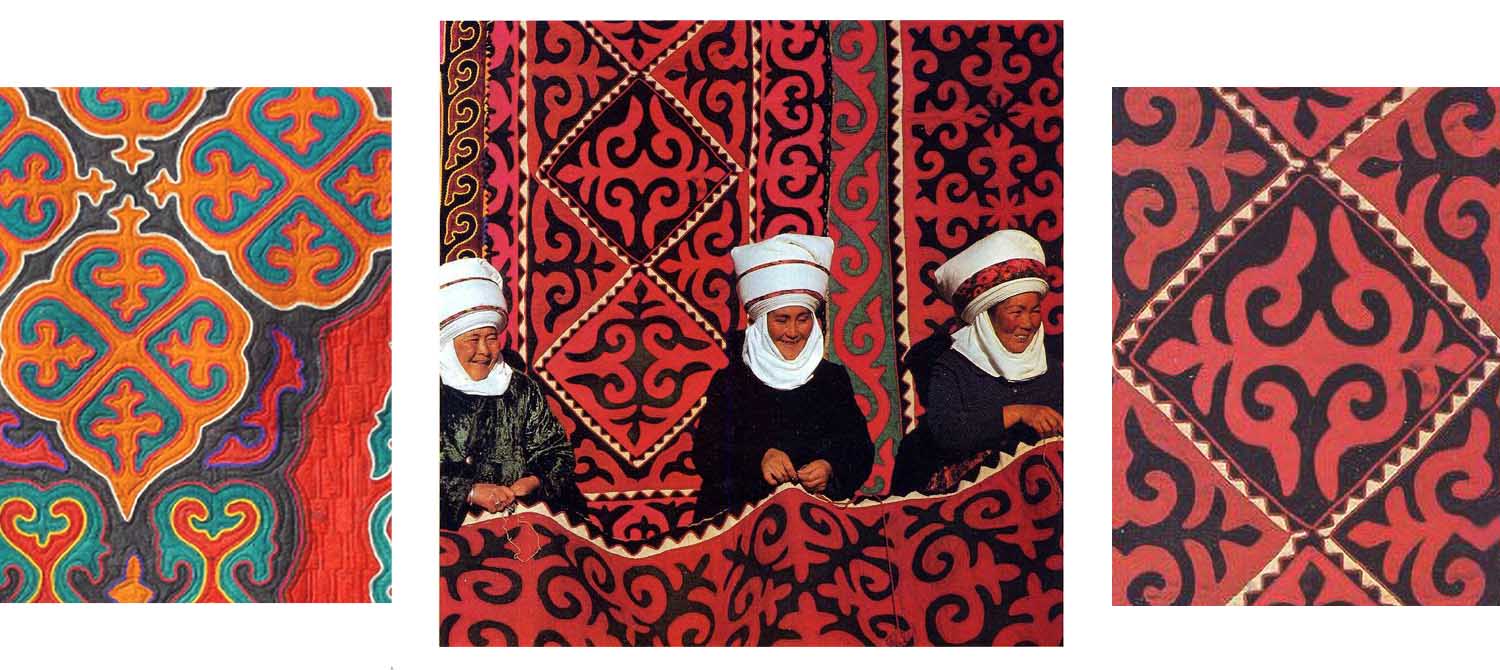
Felt never ceases to amaze me. There are so many uses for it, and you can find different ones at any latitude. That is obvious if you think about it, since felt art dates as back as the third millennium b.C. While researching textile art, I found out about Shyrdak, a very colorful felt rug from Central Asia, and precisely from Kyrgyzstan. The energy emanating from these joyful pieces of textile art can be perceived from a distance, even just by seeing them in pictures. One can only imagine what it would be like to see them live. I am in love with them!
This artifact, up until a few decades ago, was exclusively used in homes. Indeed, it was essential for the life of Asian nomads: the walls of the Yurtas, the typical tents used especially in Mongolia and Uzbekistan, were in fact entirely made of layered Shyrdaks, and the floor was also covered with these felt rugs. A colorful woolen home, keeping entire families nice and warm even in the coldest winters, a great example of a zero-impact, ecologically perfect home. Nowadays, even Yurtas have changed, and, because of globalization, they include fewer of these wonderful hand made rugs and more modern furniture.
Some cooperatives in Kyrgyzstan, however, keep the Shyrdak tradition alive, by making felt rugs the old-fashioned way. For each piece, the wool from 4 to 5 sheep is used. The wool is accurately cleaned and dyed with natural dyes, then soaked in soap and water and hand-woven into a uniform and resistant fabric. Women take care of all the process. Luckily, Shyrdaks are very much appreciated and therefore exported throughout the world.
But one of the things that I found most interesting was the hidden symbols in these rugs. The colors are accurately chosen and carry messages that are many centuries old. For example, a stark contrast of red and blue indicates a lake and a mountain range in Kyrgyzstan. And the different patterns conceal symbols such as a mother protecting her child, soldiers defending the village, the bond with Nature, a water eddy meaning renewal, leaves paying tribute to summer pastures, pomegranates wishing fertility, and many more.
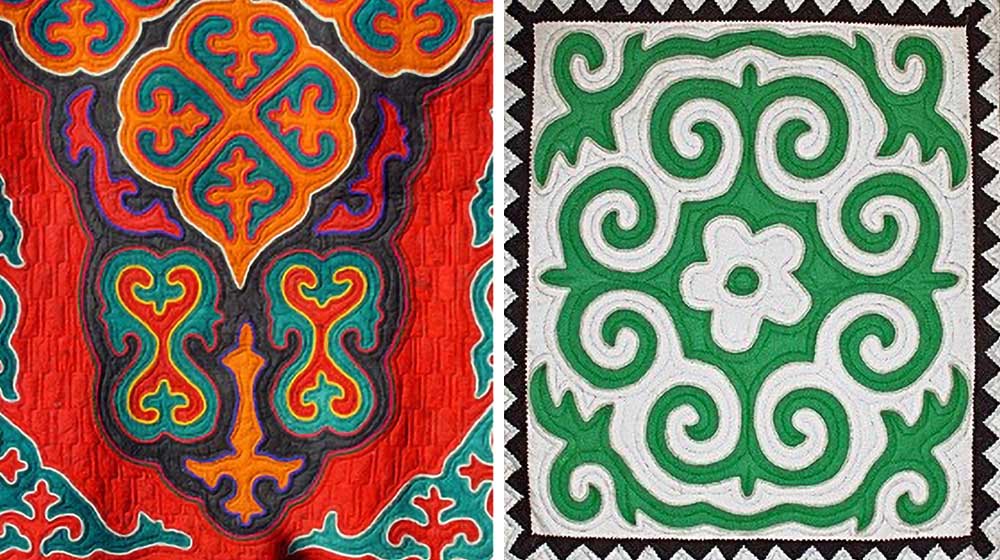
If, like me, you now have an uncontrollable urge to buy a Shyrdak, I suggest you visit the website Altyn Kol, which promotes a small yet very important all-female cooperative, working to keep the Shyrdak tradition alive and, at the same time, to create jobs for the rural communities in Kyrgyzstan.
If you liked this article maybe you would also enjoy An interview with Catherine O’Leary
WRITE A COMMENT