

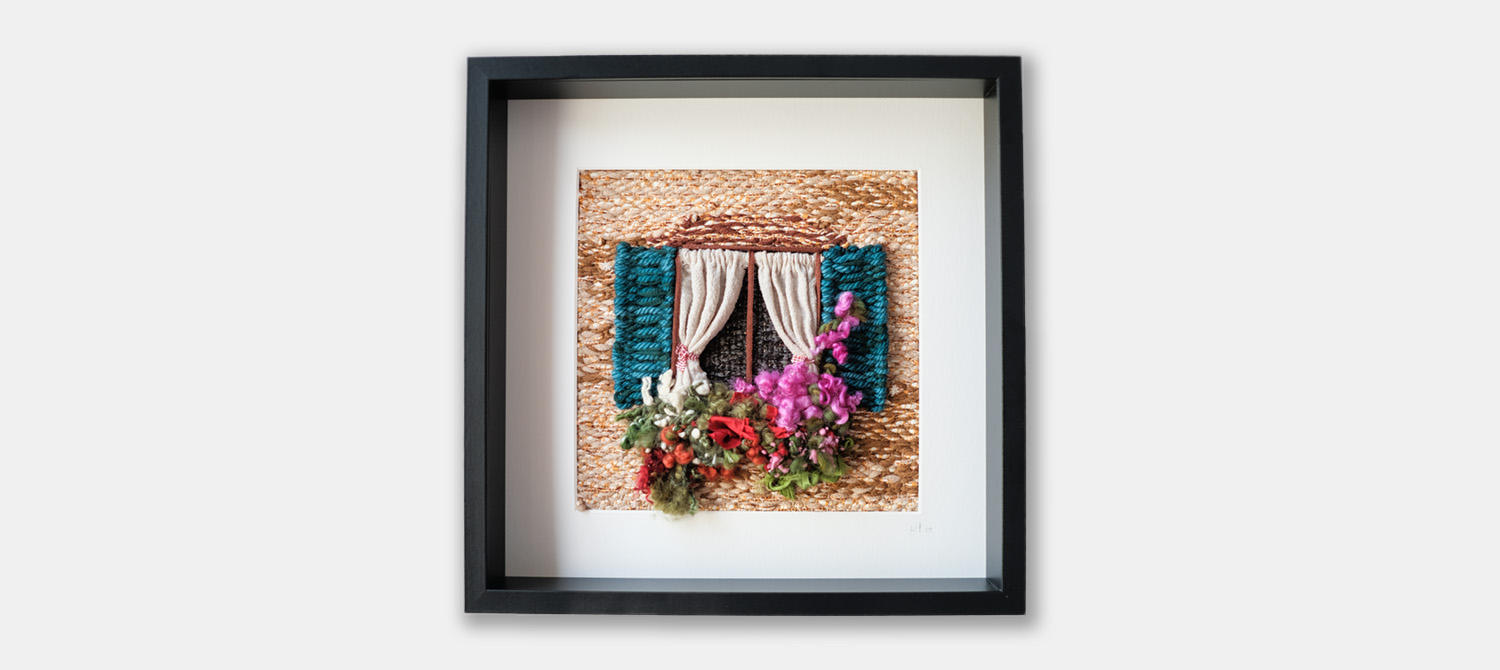
I’m a fiber artist, based near Düsseldorf, Germany. For as long as I can remember, I’ve loved the process of learning new skills, and creating with my hands. In fact, there are barely any handicrafts that I’ve haven’t tried at least once. However, when I started weaving in 2019, I felt myself move away from the title of “serial hobby crafter” to genuine artist. It was the first craft I tried where I didn’t feel bound to tutorials, patterns and books; instead, my hands instinctively knew what they needed to do and how to translate my own colourful abstract visions onto a loom. It was liberating.
As for my style, I mainly find myself drawn to the abstract. I try to approach weaving in a very fluid way, allowing the fibres and colours to guide me. I rarely ever know where I’m going with a new piece, but I’ve learned to trust the process. Over the last year or so, however, my style ventured into unfamiliar territory and I began to experiment with more literal, planned out designs. I see weaving as a form of painting with fibre, and ultimately my goal as a fibre artist is to produce intriguing textures and unexpected dimensions on the loom.
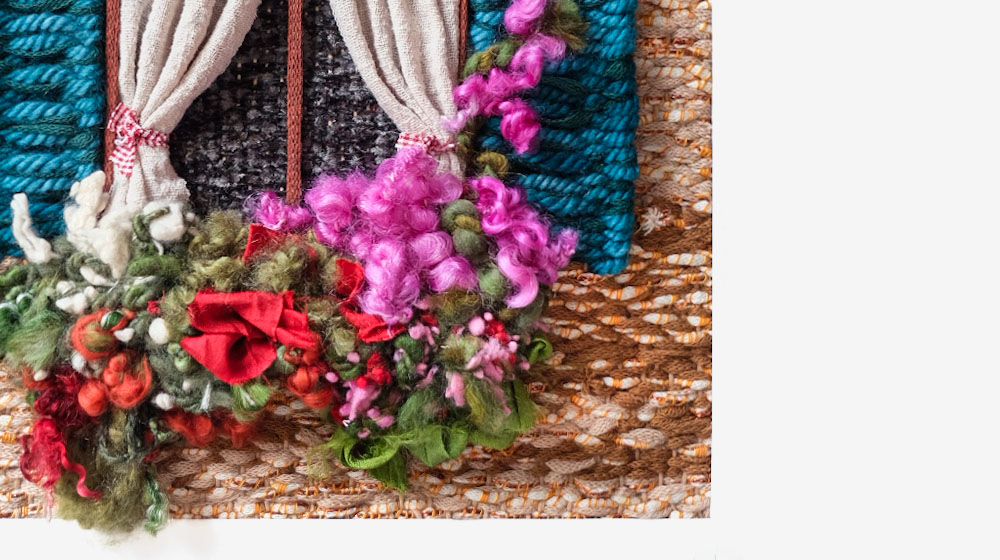
Last year, I stumbled upon an old cottage with the most spectacular showing of wisteria all over the walls and I immediately felt inspired to translate that floral wonder onto the loom. I was fascinated by how I could recreate those floral textures, but with fiber and yarn. I spent months learning different spinning techniques and experimenting with unconventional fibres and materials, and discovered new ways to create multi-dimensional texture with yarn. I decided to use this collaboration with DHG to revisit that challenge, taking inspiration from Tuscany’s beautiful stone buildings, iconic floral balconies and natural landscape.
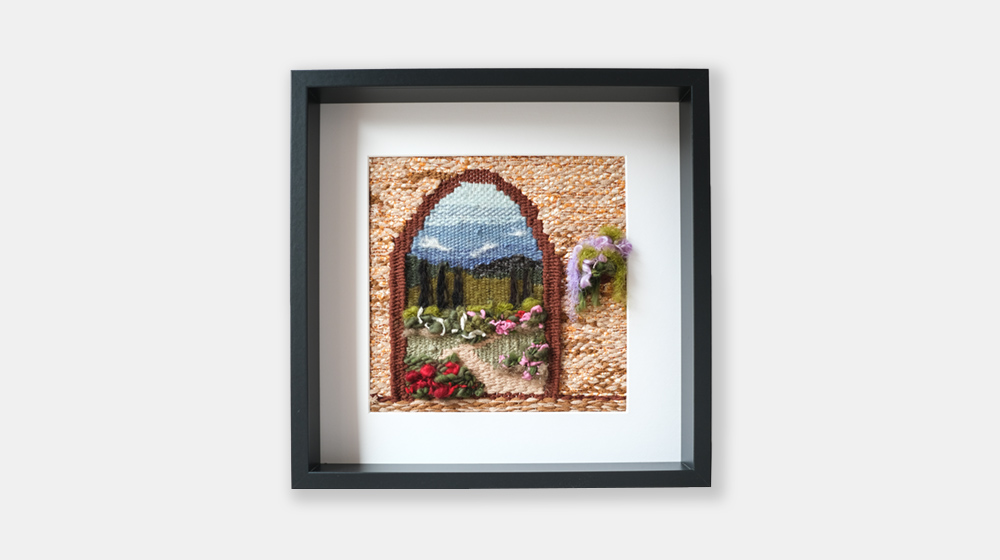
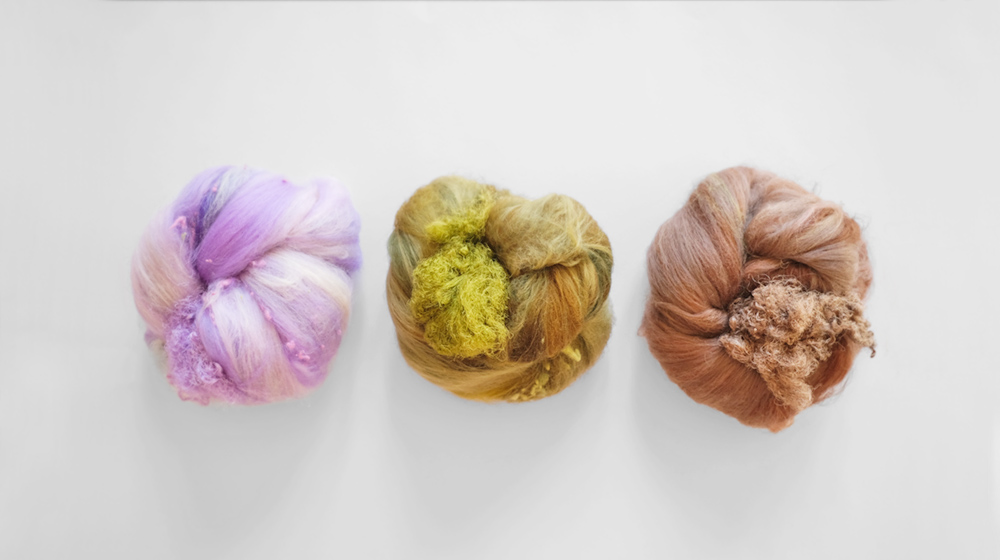
When I start a new project, I often have a very specific idea for the kinds of textures I want to make. Therefore, spinning my own art yarn has always been a very important part of my creative process. DHG spinning fibres have been a staple in my fibre collection from the beginning, because their quality and colours are unbeatable. My go-to base for spinning yarn is the extra fine merino wool (it’s like spinning clouds!), which allows me to add in tons of textural extras like the sari silk waste, wool nepps and viscose. This was perfect for bringing my floral elements to life. This is also my first time using DHG’s ‘Sailorman’ and ‘Ariel’, and I was really impressed by this style of tape yarn. It held up very well as my woven canvas, and created the ideal ‘brickwork’ texture for my Tuscan buildings.


WRITE A COMMENT